
In the competitive landscape of business-to-business commerce, understanding and mastering B2B sales leads represents the cornerstone of sustainable growth and profitability. As we navigate through 2025, the methods and strategies for generating, nurturing, and converting these leads continue to evolve, demanding a comprehensive understanding of both traditional approaches and emerging trends.
B2B sales leads are potential customers—whether individuals or companies—who have shown interest in your products or services and possess the characteristics that make them likely to purchase from your business. These prospects represent the lifeblood of any B2B organization, serving as the foundation upon which sales pipelines are built and revenue targets are achieved.
Unlike B2C leads, B2B prospects typically involve longer sales cycles, multiple decision-makers, and higher transaction values. They require careful nurturing and strategic engagement to move through the sales funnel successfully. The quality of these leads often matters more than quantity, as a single qualified B2B lead can result in substantial revenue over extended periods.
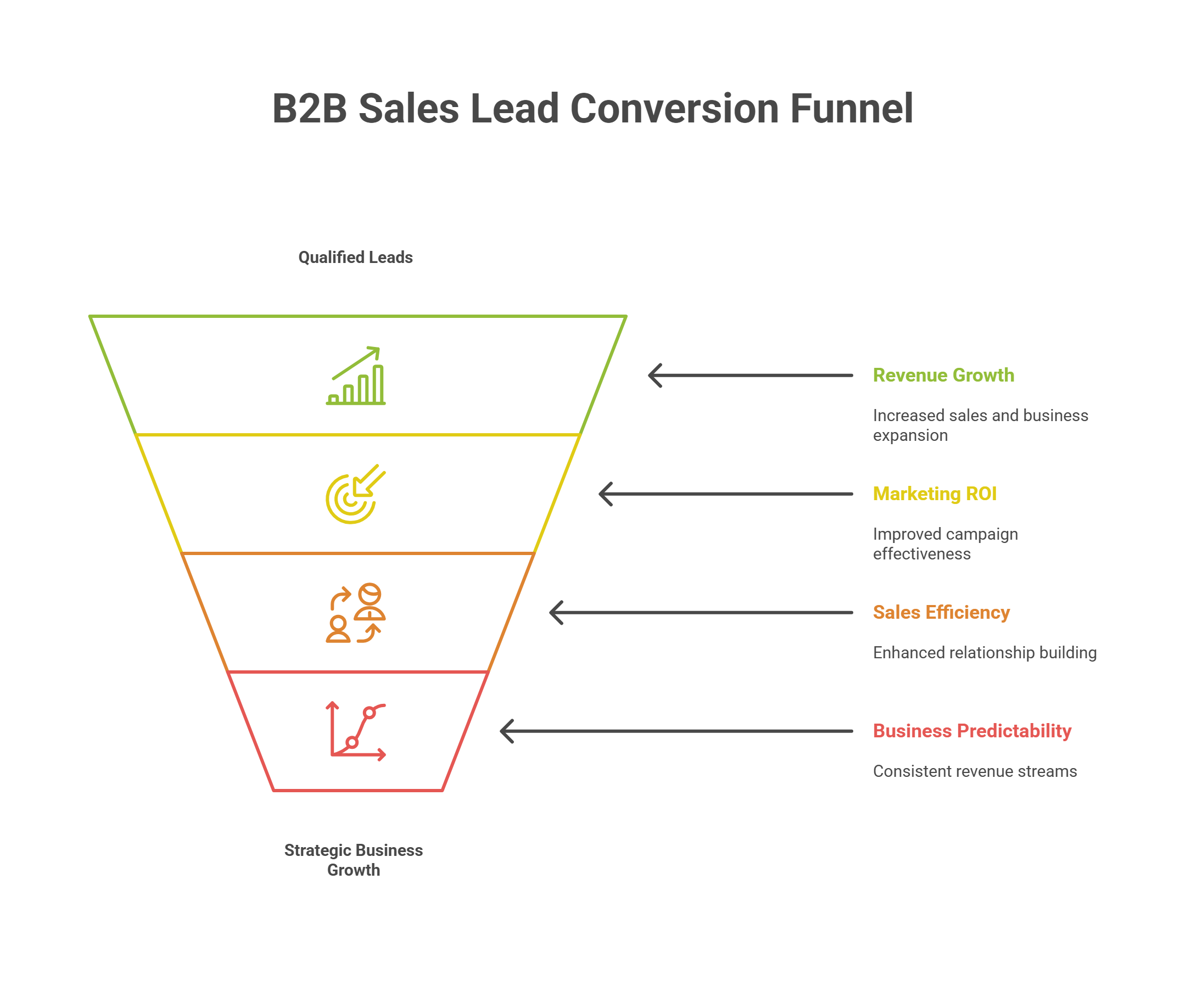
Without a steady stream of qualified leads, even the most innovative companies struggle to maintain growth momentum. B2B sales leads provide several strategic advantages that directly impact business success:
Revenue Growth Foundation: Every sale begins with a lead. The more qualified prospects in your pipeline, the greater your potential for revenue generation and business expansion.
Marketing ROI Optimization: Quality leads enable marketing teams to focus their efforts and budgets on prospects most likely to convert, significantly improving return on investment and campaign effectiveness.
Sales Efficiency Enhancement: When sales teams work with pre-qualified leads, they can dedicate more time to relationship building and closing deals rather than cold prospecting.
Business Predictability: A consistent flow of leads creates predictable revenue streams, enabling better forecasting and strategic planning for future growth initiatives.
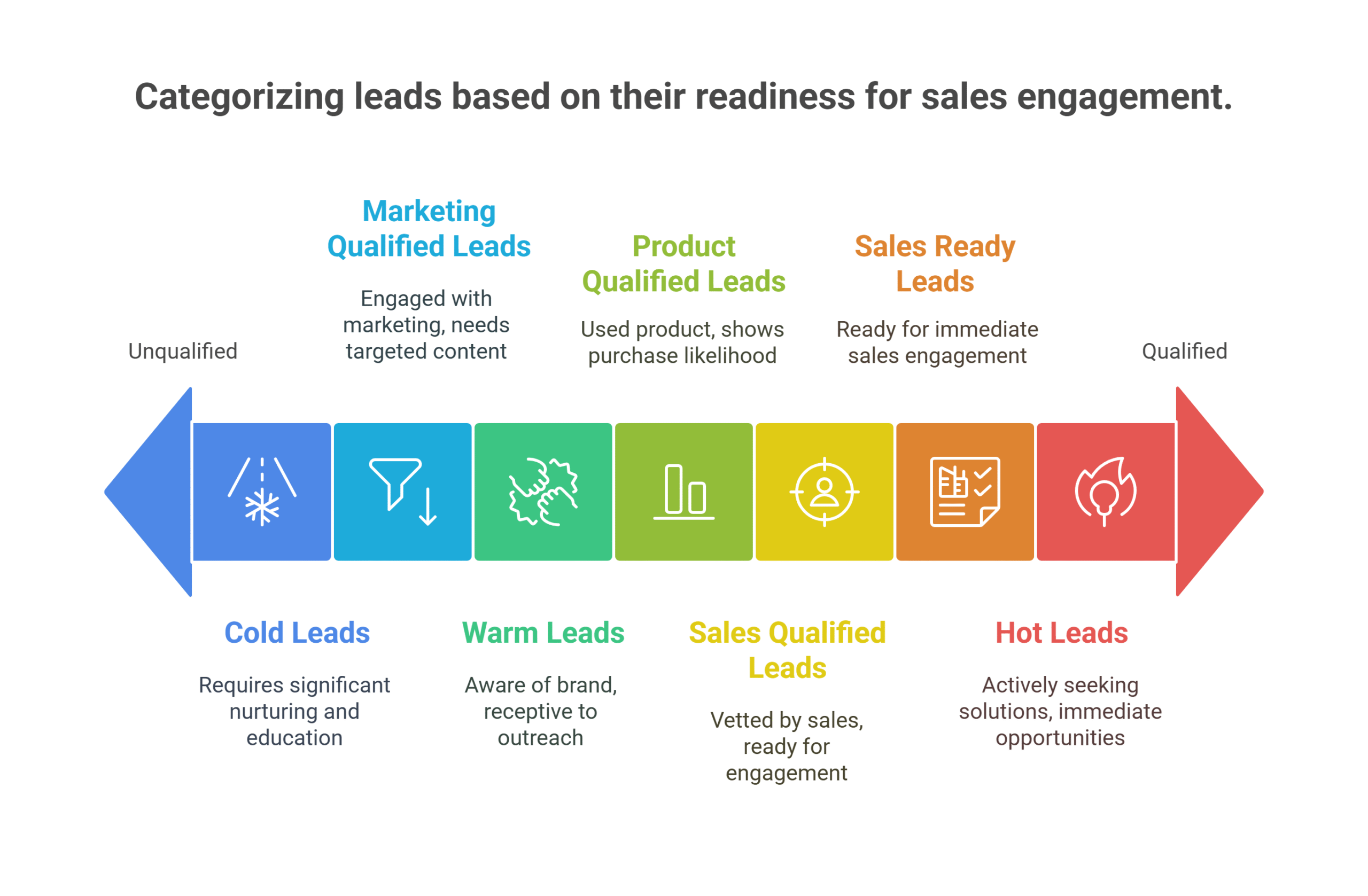
Understanding the different categories of B2B leads helps businesses tailor their approach and allocate resources more effectively:
These prospects have had minimal or no interaction with your brand. They may fit your ideal customer profile but haven’t expressed explicit interest in your solutions. Cold leads require significant nurturing and education before they’re ready for sales engagement.
Warm leads have shown some level of interest through actions like downloading content, attending webinars, or engaging with your social media. They’re aware of your brand and may be evaluating solutions, making them more receptive to targeted outreach.
These high-intent prospects are actively seeking solutions and may have requested demos, pricing information, or direct contact. Hot leads represent immediate opportunities and should receive priority attention from sales teams.
MQLs have engaged with your marketing content and meet specific criteria indicating genuine interest, but they’re not yet ready for direct sales contact. They require additional nurturing through targeted content and engagement.
SQLs have been vetted by the sales team and deemed ready for direct sales engagement. They’ve demonstrated clear buying intent and possess the authority, budget, and timeline to make purchasing decisions.
Common in SaaS and technology companies, PQLs have used your product through trials or freemium models and shown usage patterns indicating purchase likelihood.
These fully qualified prospects are ready for immediate sales engagement, having demonstrated clear intent, budget authority, and defined timelines for implementation.

Creating valuable, educational content serves as a powerful lead magnet. Develop comprehensive resources including:
Optimize your online presence to capture prospects actively searching for solutions:
Leverage professional networks to connect with prospects:
Develop targeted email sequences that nurture prospects through the buying journey:
Leverage existing relationships for lead generation:
Participate in industry events to build relationships and generate leads:
Implement systematic approaches to evaluate and prioritize leads:
Create targeted content and messaging for different lead segments:
Ensure seamless handoffs between marketing and sales teams:
Develop systematic approaches to stay engaged with prospects:
Track essential metrics to evaluate lead generation effectiveness:
Regularly analyze performance and optimize your approach:
B2B sales leads represent the foundation of business growth in today’s competitive marketplace. Success requires a comprehensive understanding of lead types, strategic generation approaches, and systematic conversion processes. By implementing the strategies outlined in this guide and maintaining a focus on continuous improvement, businesses can build robust lead generation systems that drive sustainable growth and profitability.
The key lies in combining traditional relationship-building approaches with modern digital marketing techniques, ensuring that every lead receives appropriate attention and nurturing based on their stage in the buying journey. As we move forward in 2025, companies that master these fundamentals while adapting to emerging trends will maintain competitive advantages in their respective markets.
Remember that effective B2B lead generation is not just about quantity—it’s about identifying and nurturing the right prospects who align with your ideal customer profile and can benefit most from your solutions. Focus on building genuine relationships, providing consistent value, and maintaining persistent yet respectful engagement throughout the entire sales process.
B2B leads typically involve longer sales cycles, multiple decision-makers, and higher transaction values compared to B2C leads. B2B prospects often require more education and nurturing, as they’re making purchasing decisions that impact their entire organization. The buying process is more complex, involving research, approval processes, and budget considerations that can span several months.
On average, it takes 6-8 touchpoints to convert a B2B lead into a customer. However, this can vary significantly based on your industry, product complexity, and deal size. High-value enterprise solutions may require 12-15+ touchpoints, while simpler SaaS products might convert with fewer interactions. The key is maintaining consistent, valuable engagement throughout the nurturing process.
B2B lead conversion rates vary by industry and lead source, but generally range from 2-5% for cold leads and 10-20% for warm leads. Marketing qualified leads (MQLs) typically convert to sales qualified leads (SQLs) at rates of 13-27%, while SQLs convert to customers at approximately 20-30%. Focus on improving lead quality rather than just increasing quantity for better conversion rates.
Speed is crucial in B2B lead follow-up. Research shows that leads contacted within the first hour are 7 times more likely to have meaningful conversations with decision-makers. Aim to respond to hot leads within 15-30 minutes, warm leads within 2-4 hours, and cold leads within 24 hours. Implement automated systems to ensure no lead falls through the cracks.
There’s no single “best” channel, as effectiveness varies by industry and target audience. However, the most successful B2B companies typically use a multi-channel approach combining content marketing, LinkedIn outreach, email marketing, and SEO. Content marketing and referrals often generate the highest-quality leads, while social media and paid advertising can provide good volume for top-of-funnel awareness.
Use the BANT framework (Budget, Authority, Need, Timeline) as a starting point, but adapt it to your specific context. Key qualification questions include: Does the prospect have a genuine need for your solution? Do they have the budget allocated? Are you speaking with decision-makers or influencers? What’s their timeline for implementation? Use lead scoring to automate initial qualification based on demographic and behavioral data.
Purchased lead lists can provide volume but often lack quality and engagement. These leads haven’t expressed interest in your specific solution and may not be GDPR or privacy-regulation compliant. Instead, focus on organic lead generation through content marketing, SEO, and referrals. If you do purchase lists, ensure they’re from reputable vendors, properly segmented, and compliant with data protection regulations.
The nurturing timeline depends on your sales cycle length and industry. Generally, continue nurturing leads for 12-18 months if they remain engaged. However, prioritize recent, active leads over older, inactive ones. Implement re-engagement campaigns for dormant leads, and if they don’t respond after 2-3 attempts over 3-6 months, consider removing them from active campaigns while keeping them in your database for future reference.
Marketing automation streamlines lead nurturing by delivering personalized content based on prospect behavior and characteristics. It enables lead scoring, automated follow-up sequences, and seamless handoffs between marketing and sales teams. Automation helps maintain consistent engagement at scale while freeing up time for sales teams to focus on high-value activities like relationship building and closing deals.
Calculate ROI by dividing the revenue generated from leads by the total cost of lead generation activities, then multiply by 100 for a percentage. Track metrics like cost per lead, lead-to-customer conversion rate, average deal size, and customer lifetime value. Use attribution modeling to understand which channels and campaigns drive the most valuable leads, and adjust your strategy and budget allocation accordingly.