
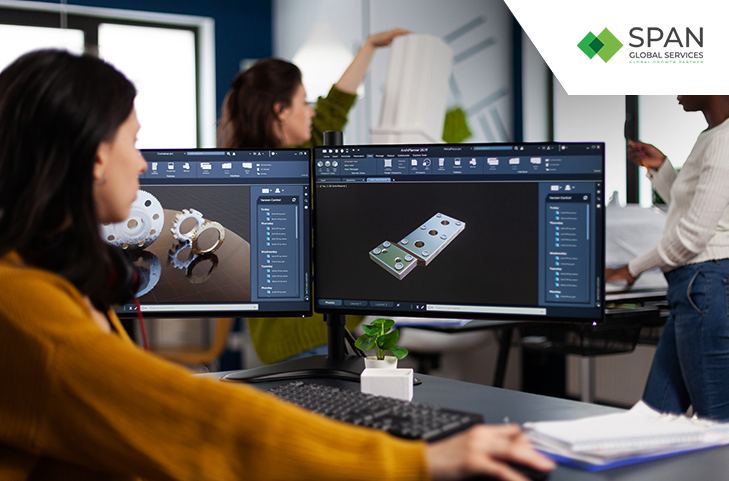
When it comes to computer-aided design (CAD) software, SolidWorks has established itself as one of the most powerful and widely adopted solutions across multiple industries. From aerospace giants to automotive leaders, many Fortune 500 companies that use SolidWorks have revolutionized their product development processes using this sophisticated 3D modeling platform. In this comprehensive guide, we’ll explore the top companies using SolidWorks and how they leverage this technology to maintain their competitive edge.
Before diving into specific companies using SolidWorks, it’s important to understand why this CAD software has become the industry standard. SolidWorks, owned by Dassault Systèmes since 1997, offers an intuitive interface combined with powerful 3D modeling capabilities, making it ideal for everything from concept design to manufacturing.
The software enables engineers and designers to:
Now let’s explore the Fortune 500 companies that have made SolidWorks central to their innovation processes.

Industry: Aerospace & Defense | Annual Revenue: $75.3 billion| Employees: ~170,000
Boeing, one of the world’s largest aerospace manufacturers, represents one of the premier companies using SolidWorks for various applications. While Boeing primarily uses CATIA for its large commercial aircraft programs like the 787 Dreamliner, many of its divisions and subsidiaries utilize SolidWorks for component design, tooling, and smaller assembly projects
Boeing’s adoption of SolidWorks demonstrates how even aerospace giants leverage multiple CAD platforms to optimize different aspects of their design and manufacturing processes.
 Industry: Automotive | Annual Revenue: $185.3 billion| Employees: ~171,000
Ford is among the most prominent companies that use SolidWorks in the automotive sector. The automotive giant has integrated SolidWorks into its design workflow for various vehicle components and systems.
Ford’s engineers appreciate SolidWorks for its parametric design capabilities, which allow them to make rapid design changes and iterations while maintaining design intent across complex assemblies.

Industry: Diversified Conglomerate (Aerospace, Energy, Healthcare) | Annual Revenue: $41.6 billion | Employees: ~125,000
GE, a diversified Fortune 500 conglomerate, stands as one of the top companies using SolidWorks across its various business units, including aviation, healthcare, renewable energy, and power generation. Following its split into GE Aerospace and GE Vernova, both entities continue to leverage SolidWorks extensively.
GE’s widespread adoption of SolidWorks across its divisions highlights the software’s versatility in handling diverse engineering challenges, from micro-scale medical devices to massive power generation equipment.
 Industry: Construction & Mining Equipment | Annual Revenue: $63.1 billion | Employees: ~108,000
Caterpillar, the world’s leading manufacturer of construction and mining equipment, is one of the notable companies using SolidWorks for heavy machinery design and development.
The company benefits from SolidWorks’ robust simulation capabilities, which allow engineers to test components under extreme loads and conditions before manufacturing, reducing costly physical prototyping.

Industry: Building Automation & HVAC Systems | Annual Revenue: $23.4 billion TTM | Employees: ~99,000
Johnson Controls, a Fortune 500 leader in building automation and HVAC systems, is among the companies that use SolidWorks for its diverse product portfolio.
The company leverages SolidWorks’ sheet metal design capabilities extensively for enclosure and housing design, while using its electrical routing features for complex control systems.

Industry: Automotive | Annual Revenue: $155.3 billion | Employees: ~154,000
BMW Group stands out as one of the top companies using SolidWorks, particularly for specialized components and motorsport applications. While BMW uses multiple CAD platforms across its operations, SolidWorks plays a crucial role in specific design areas.
BMW’s engineering teams value SolidWorks for its rapid design capabilities and ease of use, which accelerates the development of innovative automotive solutions.
 Industry: Automotive & Power Equipment | Annual Revenue: $138.6 billion | Employees: ~204,000
Honda, one of the world’s largest automotive and power equipment manufacturers, is among the prominent companies that use SolidWorks for various engineering applications.
Honda’s adoption of SolidWorks complements its lean manufacturing philosophy, enabling engineers to quickly iterate designs and optimize components for performance and manufacturability.

Industry: Aerospace & Defense | Annual Revenue: $74.2 billion | Employees: ~122,000
Lockheed Martin, a Fortune 500 aerospace and defense giant, represents one of the top companies using SolidWorks for various programs and projects.
The defense contractor uses SolidWorks alongside other CAD systems, choosing the right tool for specific project requirements and leveraging SolidWorks’ strengths in rapid design and visualization.

Industry: Semiconductor Manufacturing | Annual Revenue: $54.2 billion | Employees: ~116,000
Intel, the world’s leading semiconductor manufacturer, is one of the companies using SolidWorks for equipment design and facility planning applications.
Intel engineers appreciate SolidWorks’ ability to create detailed 3D models of complex manufacturing equipment, which helps in facility planning and equipment integration.

Industry: Diversified Industrial Manufacturing | Annual Revenue: $32.7 billion (2024) | Employees: ~92,000
3M, known for its diverse product portfolio spanning healthcare, industrial, and consumer goods, ranks among the top companies using SolidWorks for product development.
3M’s global engineering teams leverage SolidWorks’ collaboration tools to develop thousands of innovative products annually, from Post-it Notes dispensers to sophisticated medical devices.
Beyond these top ten, numerous other Fortune 500 companies that use SolidWorks include:
The widespread adoption of SolidWorks among Fortune 500 companies isn’t coincidental. Several key factors drive this choice:
Companies using SolidWorks benefit from its Windows-native interface, which reduces training time and increases productivity. New engineers can become proficient quickly, reducing onboarding costs.
Top companies using SolidWorks leverage its integrated simulation tools for:
Companies that use SolidWorks often implement PDM (Product Data Management) or PLM (Product Lifecycle Management) systems to manage design data, version control, and collaboration across global teams.
The SolidWorks ecosystem includes:
Compared to high-end CAD systems, SolidWorks offers excellent value, making it accessible for both Fortune 500 giants and smaller engineering teams within these organizations.
Companies using SolidWorks in aerospace leverage its capabilities for:
Top companies using SolidWorks in automotive benefit from:
Companies that use SolidWorks for industrial equipment appreciate:
Consumer goods manufacturers among companies using SolidWorks utilize:
As companies using SolidWorks continue to evolve, several trends are shaping the future:
Fortune 500 companies are increasingly adopting cloud-based SolidWorks solutions for:
Top companies using SolidWorks are exploring AI-powered features for:
Companies that use SolidWorks are leveraging the software to:
Leading companies using SolidWorks are creating digital twins to:
Fortune 500 companies that use SolidWorks have developed several best practices:
Top companies using SolidWorks implement:
Companies using SolidWorks maximize value through:
Leading companies that use SolidWorks focus on:
Top companies using SolidWorks leverage:
Fortune 500 companies that use SolidWorks typically see significant ROI through:
The widespread adoption of SolidWorks by Fortune 500 companies across aerospace, automotive, industrial manufacturing, and technology sectors demonstrates its unmatched versatility and value in modern product development. From Boeing’s aerospace innovations to Ford’s automotive breakthroughs, these industry leaders have transformed their engineering processes through SolidWorks’ powerful 3D CAD capabilities.
For engineers and businesses looking to remain competitive in today’s fast-paced market, SolidWorks proficiency has become an essential skill. The software’s continued evolution with cloud integration, AI capabilities, and advanced simulation tools ensures that companies using SolidWorks will continue leading innovation well into the future.